
Pursuing Hospitality through Biophilic Design
For the past two years, I have listened to designers share their best practices to implement biophilic design in our monthly “Biophilic Minute”. The banner over every story is caring for people and a heart for hospitality at its truest form. Hospitality is not merely a work of our hands but involves a work in our hearts. It provides an environment for deep connection and enables people to flourish.
So how do we pursue hospitality for wellness? We create it.
Wikipedia defines hospitality as “the relationship between a guest and a host, wherein the host receives the guest with some amount of goodwill, including the reception and entertainment of guests, visitors, or strangers.” Hospitality is both action and affection, receiving and loving a stranger.
As designers, we play a pivotal role in shaping experiences within a space to help people move forward. One way to do that is by designing spaces to activate the five basic senses: sight, sound, touch, smell, and taste. Research has shown a direct correlation between wellness and experience. There is a sense of wellbeing that relationships and nature can provide by curating the right mix of lighting, acoustic comfort, experience, and design to make another space “feel like home”. How do we genuinely bring that “feeling” to the built environment? I think the answer is found in bringing life to community spaces where we can share a meal, have conversations, and connect to the outdoors.
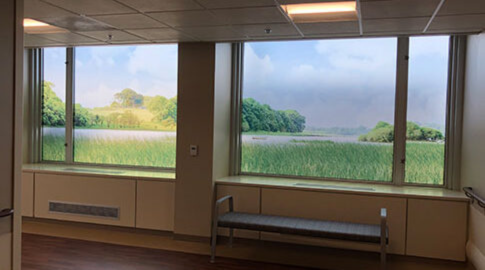
Access to sunlight, outdoor views, and biophilic artwork are great ways to bring nature into your space. Being in nature reduces stress by bringing down blood pressure, heart rate, and muscle tension. By incorporating natural elements, you can evoke the feeling of being in nature (biophilia). Art depicting wildlife and beautiful plants or adding subtle, organic, or rhythmic designs to window film are just a few ways to bring the outdoors inside! Artwork also provides powerful ways to tell stories, create connections, evoke emotion, and encourage healing.
Sound is one of the most powerful elements in life. It is the vibration that makes people hear and has a subtle and substantial impact on our feelings, emotions, and attitude. Sound reveals the characteristics of the environment, and it can contribute significantly to how you experience a location or space. Acoustics are an effective solution for reducing ambient noise in healthcare, education, and corporate settings while improving the aesthetics of your space. Acoustics help to reduce echoes, background noise and reverberations. They also improve sound quality for clearer conversations and improve the peacefulness of a room. They can be used for a variety of applications from artwork to wall graphics and privacy screens.
Biophilic window films can instantly boost the appearance of any facility and building by incorporating images of nature onto existing glass to reduce stress, promote well-being, expedite healing, and create privacy if desired. People want to be connected to nature. When they are indoors, they want to feel that outside connection. Biophilic design is an affordable way to integrate that into the built environment.
